
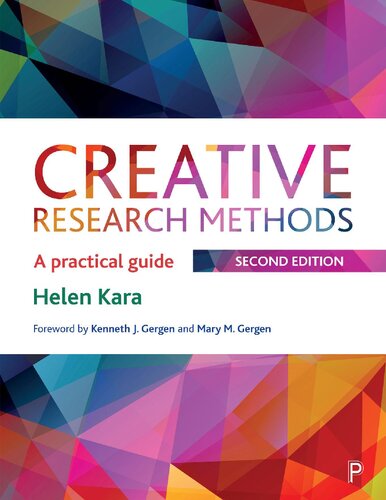
Creative Research Methods A Practical Guide 2nd Edition by Helen Kara ISBN 978-1447356745 1447356748


Original price was: $50.00.$35.00Current price is: $35.00.
Creative Research Methods A Practical Guide 2nd Edition by Helen Kara – Ebook PDF Instant Download/Delivery: 978-1447356745, 1447356748
Full download Creative Research Methods A Practical Guide 2nd Edition after payment
Product details:
ISBN 10: 1447356748
ISBN 13: 978-1447356745
Author: Helen Kara
Creative research methods can help to answer complex contemporary questions which are hard to answer using conventional methods alone. Creative methods can also be more ethical, helping researchers to address social injustice.
This bestselling book, now in its second edition, is the first to identify and examine the five areas of creative research methods:
• arts-based research
• embodied research
• research using technology
• multi-modal research
• transformative research frameworks.
Written in an accessible, practical and jargon-free style, with reflective questions, boxed text and a companion website to guide student learning, it offers numerous examples of creative methods in practice from around the world. This new edition includes a wealth of new material, with five extra chapters and over 200 new references. Spanning the gulf between academia and practice, this useful book will inform and inspire researchers by showing readers why, when, and how to use creative methods in their research.
Creative Research Methods has been cited over 2000 times.
Table of contents:
1 Introducing creative research
Introduction
Good practice in creative research
A brief history of creativity in research
Creative research methods
Indigenous research methods
What do we know about ‘creativity’?
Creativity in research
Informal and formal research
Evaluation research
Creative methods in private
Conclusion
Reflective questions
2 Creative research methods in practice
Introduction
Arts-based research in practice
Embodied research in practice
Multi-modal research in practice
Research using technology in practice
Autoethnography in practice
Conclusion
Reflective questions
3 Transformative research frameworks and Indigenous research
Introduction
Participatory research in practice
Community-based research in practice
Feminist research in practice
Emancipatory research
Queer research in practice
Asset-based research in practice
Critiquing transformative research frameworks
Indigenous research methods and ethics
Decolonising methods
Ontology and epistemology
Conclusion
Reflective questions
4 Creative research methods and ethics
Introduction
Euro-Western theories of ethics
Research governance
Managing ethical problems in creative research
Ethics in arts-based research
Ethics in embodied research
Ethics in multi-modal research
Ethics in research using technology
Ethics and transformative research frameworks
Well-being of researchers
Conclusion
Reflective questions
5 Creative thinking
Introduction
Ethical thinking
Creative thinking
Creative use of literature
Using theory creatively in research
Creativity and cross-disciplinary work
Assessing research quality
Imagination and empathy
Reflexivity
Conclusion
Reflective questions
6Arts-based and embodied data gathering
Introduction
Ethics in arts-based and embodied data gathering
Reflexive data
Writing
Diaries and journals
Interviews and focus groups
Transformative data gathering
Drawing
Mapping
Mobile methods
Vignettes
Time
Theatre
Conclusion
Reflective questions
7 Technology-based and multi-modal data gathering
Introduction
Ethics in tech-based and multi-modal data gathering
Documents
Video
Smartphones
Online and other secondary data
Using technology for interviews
Multi-modal data gathering
Conclusion
Reflective questions
8 Arts-based and embodied data analysis
Introduction
Ethics in arts-based and embodied data analysis
Data preparation and coding
Quantitative versus qualitative data analysis
Arts-based data analysis
Embodied data analysis
Analysis of talk
Transformative frameworks and data analysis
Conclusion
Reflective questions
9 Technology-based and multi-modal data analysis
Introduction
Ethics in tech-based and multi-modal data analysis
Data analysis using technology
Secondary data
Analysing documentary data
Analysing video data
Multi-modal analysis
Data integration
Conclusion
Reflective questions
10 Arts-based and embodied research reporting
Introduction
Ethics in research reporting: part 1
Writing for research
Embodied writing
Feedback
Fact versus fiction
Journals
Poetic writing
Conclusion
Reflective questions
11 Technology-based and multi-modal research reporting
Introduction
Ethics in research reporting: part 2
Social media
Collaborative reporting
Using technology in research reporting
Multi-modal reporting
How to write better for research
Conclusion
Reflective questions
12 Arts-based and embodied presentation
Introduction
The ethics of arts-based and embodied presentation
Arts-based presentation
Diagrams, infographics and maps
Embodied presentation at conferences and meetings
Conclusion
Reflective questions
13 Technology-based and multi-modal presentation
Introduction
The ethics of technology-based and multi-modal presentation
Presentation using technology
Graphs and charts
Multi-modal presentation
Conclusion
Reflective questions
14 From research into practice
Introduction
Ethics in creative dissemination and implementation
Online and other media
Mainstream media
Arts-based dissemination
Multi-modal dissemination
Dissemination in transformative research
Implementation
Knowledge exchange
Impact
Conclusion
Reflective questions
15 Conclusion
Further reading
References
People also search for:
undergraduate research and creative activities
quantitative research critique example
quantitative research critique
creative research questions
creative qualitative research methods
Tags: Helen Kara, Creative Research, A Practical