
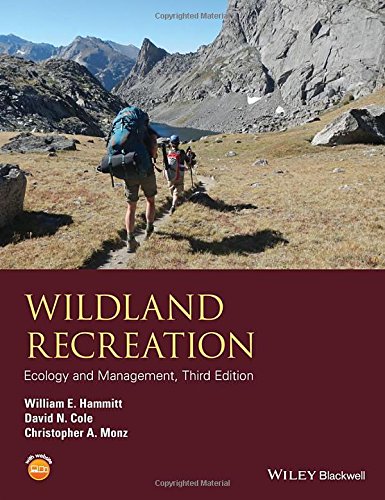
Wildland Recreation Ecology and Management 3rd Edition by William Hammitt, David Cole, Christopher Monz ISBN 1118397002 978-1118397008


Original price was: $50.00.$35.00Current price is: $35.00.
Wildland Recreation Ecology and Management 3rd Edition by William E. Hammitt, David N. Cole, Christopher A. Monz – Ebook PDF Instant Download/Delivery: 1118397002, 978-1118397008
Full download Wildland Recreation Ecology and Management 3rd Edition after payment
 Product details:
ISBN 10: 1118397002
ISBN 13: 978-1118397008
Author:William E. Hammitt, David N. Cole, Christopher A. Monz
WILDLAND RECREATION
THE AUTHORITATIVE GUIDE TO UNDERSTANDING AND MANAGING THE ECOLOGICAL IMPACTS OF RECREATIONAL ACTIVITIES IN WILDLANDS
This third edition provides an updated and thorough examination of the ecological impacts of recreational use on wildlands and the best management practices to employ in places where recreation and preservation of natural conditions are important – and often conflicting – objectives.
Covering the latest research, this edition provides detailed information about the environmental changes that result from recreational use. It describes spatial patterns of impact and trends over time, and then explores the factors that determine the magnitude of impact, including the amount of use, the type and behavior of use, and the environmental durability. Numerous examples, drawn from parks and recreation areas around the world, give readers an insight into why certain areas are more heavily damaged than others, and demonstrate the techniques available to mitigate damage.
The book incorporates both the first-hand experience of the authors and an exhaustive review of the world’s literature on the subject. Boxes provide quick access to important material, and further resources are referenced in an extensive bibliography. Essential reading for all park and protected area management professionals, this book is also a useful textbook for upper division undergraduate and graduate students on recreation ecology and recreation management courses.
Table of contents:
PART I Introduction
Wildland Recreation and Resource Impacts
What is Wildland Recreation?
What is Recreation Resource Impact?
Ecological Impacts of Wildland Recreation
Recreation Ecology
The Importance of Ecological Impacts
The Manager’s Role
Recreational Capacities
Themes of this Book
References
PART II IMPACTS TO RESOURCE COMPONENTS
Soil
Basic Soil Ecology
- What is soil?
- Soil texture and structure
- Pore space
- Bulk density
- The soil profile
Effects of Recreation on Soils
- Organic matter
- Profile truncation
- Soil compaction
- Macroporosity and infiltration rate
- Soil moisture
Soil Erosion
- Erosion as a natural process
- Recreation and erosion
- Other soil impacts
- Impacts associated with campfires
Summary
References
Vegetation
Vegetation Impact Parameters
- Amount of vegetation
- Species composition and other properties
- Tree condition
Understanding Vegetation Impacts
- Ground cover
- Shrubs and saplings
- Mature trees
Summary
References
Wildlife
Recreation Influences on Wildlife Responses
Wildlife Responses to Recreation
Human–Wildlife Interactions
Recreation–Wildlife Impacts
- Animal disturbance and harassment
- Harvest
- Habitat modification
- Alteration of behavior
- Species displacement and reproduction level
- Species composition and structure
Impacts on Wildlife Species
- Large mammals
- Medium-sized animals
- Small animals
- Fish
Summary
References
Water
Dispersed Recreation and Water Impacts
Basic Water Ecology
- Water temperature and flow
- Dissolved oxygen
- Nutrient influx
- Coliform bacteria and other pathogens
Backcountry Camping and Drinking Sources
Solid Waste and Foreign Materials
Suspended Matter and Turbidity
Summary
References
PART III Impact Patterns and Trends
Impact Patterns
Spatial Patterns of Impact
- Impact zone
- Intersite zone
- Buffer zone
Impact Patterns at Multiple Spatial Scales
Temporal Patterns of Impacts
Recovery Rates of Resources
Summary
References
Trends in Wildland Recreation
Use and Impacts
Early Recent and Projected Outdoor Recreation Use
Trends in Wildland and Wilderness Use
Trends in Wildland and Wilderness Users
- Conclusions drawn from trend synthesis
Trends in Wildland Impacts
- Trail impact trends
- Campsite impact trends
Summary
References
PART IV Factors Affecting Impacts
Environmental Durability
Vegetation
Soil Characteristics
Topographic Characteristics
Ecosystem Characteristics
- Wildlife
Aquatic Environments
Season of Use
Map-Based Analysis Approaches
Summary
References
Visitor Use and Behavior
Amount of Use
Use Distribution
- Type of use
Party size
User behavior
- Minimum impact knowledge
- Experience level
- User motivation
- Social group and structure
Place Bonding
Mode of Travel
- Snowmobiles, skis, and snowboards
- Motorboats, personal watercraft, and nonmotorized boats
- Off-road vehicles, mountain bikes, stock, and foot travel
Summary
References
PART V Management Alternatives
Strategies and Concepts of Management
General Principles
Planning for Management
- Recreation opportunity spectrum
- A visitor use management framework
Management of Problems
- Strategic purpose
- Types of undesirable visitor actions
- Types of management approaches
References
Monitoring Recreational Impacts
Camp and Picnic Sites
- Photographs
- Condition class estimates
- Multiple parameter systems
Trails and Roads
- Samples at fixed locations
- Rapid survey samples
- Census techniques
- Informal trails
- Roads and off-road vehicle trails
Water Bodies
Wildlife
Developing a Monitoring System
References
Visitor Management
Use Limits
Length of Stay Limits
Dispersal of Use
Concentration of Use
Restrictions on Type of Use
Group Size Limits
Low Impact Education
- Message content
- Effective communication
Seasonal Limitations on Use
Campfire Management Alternatives
Visitor Information Needed to Manage Recreation Impacts
References
Site Management
Locating Use on Resistant Sites
Permanent Closures
Temporary Site Closures
Influencing Spatial Distribution of Use
Site Hardening and Shielding
Rehabilitation of Closed Sites
References
Air, Sound, and Technology: New Issues for Recreation Ecology
Air Quality
- Within-park emissions
- Importance of air pollution
- Night sky light visibility
- Summary and solutions
Natural Soundscapes
- Understanding soundscapes and key ecological concerns
- Impacts of noise on visitor experiences in wildlands
- Assessment and monitoring of soundscapes
- Summary and solutions
Technology
- Improved technology
- New recreational activities
- Electronic technology
- Summary and solutions
References
PART VI Conclusion
A Lasting Impact
Wildland Recreation and Resource Impacts: Necessities
Understanding the Resource
Environment and Visitor Influences
Some Management Tools
New Issues and Knowledge
Lasting into the Future
People also search for:
wildland recreation ecology and management
wildland recreation ecology and management 3rd edition
wildland ecology
wildland recreation
wildland fire ecologist
Tags:
William Hammitt, David Cole, Christopher Monz,Wildland Recreation